Therapeutic Modalities
Therapeutic Modalities
In addition to chiropractic adjustments, we use a range of therapeutic modalities to accelerate healing, reduce inflammation, and restore function.
Not every visit here is only an adjustment. Alongside chiropractic care we use a handful of in-office therapies, and which ones you see depends entirely on what we find when we look at you. The three we use most are electrical muscle stimulation, therapeutic ultrasound, and rehab exercise. None of them is a treatment on its own, and none replaces working out what's actually going on. They're tools we reach for as part of a plan, and if a tool isn't right for what you have, we won't use it just because the machine is in the room. You won't be handed a menu and asked to choose, either. We pick based on the exam, on what you tell us hurts and how it behaves through the day, and we explain why before anything gets set up.
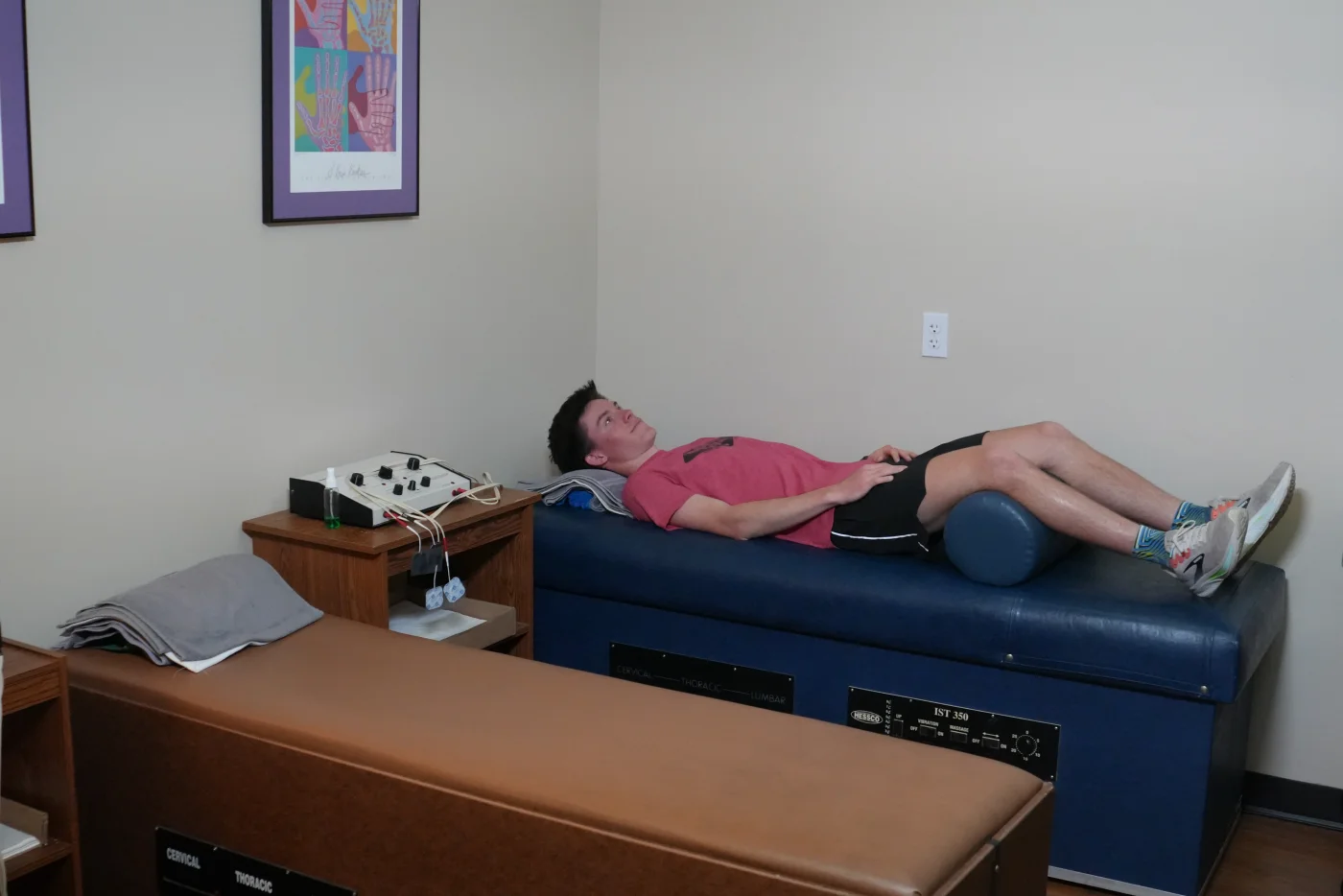
Electrical muscle stimulation, usually shortened to EMS, uses low-level electrical impulses delivered through pads on the skin to make muscle fibers contract and release. Most people describe it as a buzzing or light tapping feeling, and we set the intensity with you rather than at you. You tell us when it's strong enough, and we can turn it down at any point. A session usually runs ten to fifteen minutes, often while you're lying comfortably on a table with a hot or cold pack. It's used for muscles that have tightened up and gone into guard mode, especially around the low back, neck, shoulders, and mid-back. The pads go over the area we're working on, usually four of them, and stay put for the session. Nothing is inserted and nothing breaks the skin, and you stay dressed apart from exposing the area itself.
Therapeutic ultrasound is a different thing entirely from the ultrasound used to take pictures of a baby, even though the underlying technology is related. Instead of producing an image, a therapeutic unit sends sound waves into the tissue through a wand and a gel, creating gentle deep warmth in the soft tissue below the skin. You'll feel the wand moving in slow circles and a mild warmth, and that's about it. There's no shock or sting. Sessions are short, usually five to ten minutes over a specific area, and it's typically used on soft tissue rather than directly over bone. The gel is cool going on and gets wiped off afterward, and there's nothing to feel for the rest of the day. If the warmth stops being comfortable at any point, say so, because the setting is adjustable.
The third piece is the one that does the most work between visits: rehab exercise. After we've looked at you, we put together a specific set of stretches and strengthening movements for what we found, show you exactly how to do each one, and check your form so you're not practicing it wrong at home. These are usually short, unglamorous routines of a few minutes rather than a program that takes over your evening. We change them as things change. If you're already in physical therapy or working with a trainer, tell us, so what we give you fits alongside that instead of competing with it. All of this happens at 3407 Wells Branch Pkwy, Suite 625, in Wells Branch, North Austin, with parking right at the door, where the Chicoine family has been caring for patients since 1989. We see people from across North Austin, Wells Branch, and Pflugerville.
Available Therapies
- Electrical Muscle Stimulation (EMS) — reduces pain, inflammation, and muscle spasms using electrical impulses to stimulate muscles and promote healing
- Therapeutic Ultrasound — sound waves that increase blood flow and speed healing
- Rehab Exercises and Strengthening — customized programs to strengthen muscles and prevent re-injury
Electrical Muscle Stimulation (EMS)
- Uses low-level electrical impulses to stimulate muscle contraction
- Reduces pain, swelling, and muscle spasms
- Promotes blood flow to injured areas for faster healing
- Helps retrain muscles after injury or surgery
- Safe, non-invasive, and used alongside chiropractic adjustments
- Commonly used for auto injury, back pain, neck pain, and sports recovery
Common Questions
What does electrical muscle stimulation feel like?
Most people describe a buzzing or light tapping under the pads. It should never be painful. We start low and bring the intensity up with you telling us when to stop, and you can ask us to turn it down or off at any point during the session. A typical session lasts ten to fifteen minutes while you lie comfortably on the table.
Is therapeutic ultrasound the same as a pregnancy ultrasound?
No, though the underlying technology is related. A diagnostic ultrasound produces an image. A therapeutic unit isn't making a picture at all. It sends sound waves into the soft tissue through a wand and a gel to create gentle deep warmth. You feel the wand moving in slow circles and mild heat. It takes about five to ten minutes over one area.
Do these therapies replace an adjustment?
No. They're used alongside chiropractic care, not instead of it, and neither one replaces a proper look at what's going on. What we find is what determines whether any of these are right for you at all. Some patients get an adjustment and nothing else. Some have a therapy before or after. Some are given exercises and no in-office therapy at all.
What happens at a first visit?
We start with a conversation about what brought you in and how long it's been going on, then look at how the area moves and where you're stiff or tender. You get a plain-language explanation of what we found and what care would involve before anything is decided. Bring a photo ID and your insurance card. Plan on about forty-five minutes for the first appointment.
How long is a therapy session?
Short. Electrical muscle stimulation typically runs ten to fifteen minutes and therapeutic ultrasound about five to ten minutes over a given area. Combined with an adjustment, most follow-up visits take somewhere between fifteen and thirty minutes end to end. Your first visit is longer, because that's where the conversation and the exam happen.
Do I have to do the home exercises?
They're the part of your care that happens on the days you aren't here, so they matter. We keep them realistic on purpose, usually a few minutes of specific stretches or strengthening rather than a long program. We show you each movement in the office and check your form. If a routine isn't fitting into your life, tell us and we'll change it rather than have you skip it.
What should I wear?
Something comfortable you can move in, and something that lets us reach the area we're working on. For low back or mid-back work, a t-shirt and soft pants are ideal. You stay dressed for the therapies apart from exposing the area itself, and there are gowns if you'd rather change. Bring a photo ID and your insurance card the first time.
Do you take insurance, and where are you?
We accept most major health insurance plans and also take cash, check, and major credit cards. Coverage varies by plan, so call (512) 255-1777 and we'll check yours before your visit. Our office is at 3407 Wells Branch Pkwy, Suite 625, in Wells Branch, North Austin, with parking right at the door. Rosamaria on our team speaks fluent Spanish.
Ready to get started?
Book Appointment (opens in new window)Ready to Start Feeling Better?
Schedule a consultation online or call us and we'll create a treatment plan tailored to your needs.