
Pain & Conditions
Whiplash

Whiplash is a neck injury caused by a sudden, forceful back-and-forth movement of the head — most commonly from rear-end auto collisions. It strains the muscles, ligaments, and joints of the neck. Symptoms often do not show up for hours or even days afterward, which is why it is worth being looked at early rather than waiting to see how it settles.
Almost nobody with whiplash feels it at the scene. You get rear-ended at a light on Wells Branch Parkway, you check that everyone is okay, you trade information, and you drive home shaken but basically fine. It's the next morning that tells the real story. You go to back out of the driveway, turn your head, and it stops halfway. Your shoulders feel like they've been clenched all night. There's a headache sitting at the base of your skull that wasn't there yesterday. That delay is normal, and it's the single most common thing we hear from people who call us a few days after a collision, usually starting with some version of I thought I was fine.
The reason for the delay is in the tissue. Whiplash isn't a bruise you can look at. In the fraction of a second an impact takes, your head is thrown through a range your neck never plans for, and the muscles and ligaments holding those joints together get strained. Swelling builds over hours. Meanwhile your body starts protecting the sore area by tightening everything around it, and that guarding is often what you actually notice first, as stiffness rather than pain. It's also why the speed on the report and the damage to the bumper tell you so little. A modern bumper is built to resist damage, which can mean more of the force passes through to the people inside. We look at the person, not the car.
A visit for whiplash is mostly measuring and listening. We ask how the crash happened, which way your head was turned, what you haven't been able to do since, and how things have shifted over the days since. Then we look at how far your neck actually turns and bends, what's tender, and how your shoulders and upper back are moving along with it. If what we find is something better handled by a different kind of doctor, we'll say so directly rather than starting care and hoping. Where chiropractic care is a good fit, it usually starts gently and builds. Early on, the aim is calming irritated tissue. As things settle, the emphasis shifts toward getting movement back and toward exercises you do at home, because a neck that stays still gets stiff.
We also want to know what your days look like right now, because sleep, driving, and desk time all pull on a neck that's already sore, and small changes to those in the first couple of weeks tend to matter as much as anything that happens in our office. Chicoine Chiropractic sits at 3407 Wells Branch Pkwy, Suite 625, in Wells Branch, North Austin, with parking right at the door, and has been caring for families here since 1989. Dr. Shelly Hogan, D.C. and Dr. Nicole Edwards, D.C. are sisters, and they see patients from across North Austin, Wells Branch, and Pflugerville. Rosamaria at the front desk speaks fluent Spanish. You don't need a referral in Texas, so you can book online or call (512) 255-1777.
Symptoms You May Experience
- Neck pain and stiffness that worsens with movement
- Headaches, typically starting at the base of the skull
- Loss of range of motion in the neck
- Pain or tenderness in the shoulders and upper back
- Tingling or numbness in the arms
- Dizziness and fatigue
- Blurred vision or ringing in the ears
- Difficulty concentrating or remembering
- Jaw pain or TMJ discomfort
Why Early Treatment Matters
- Stiffness that often sets in over the following days
- Scar tissue can form in damaged muscles, limiting mobility
- Chronic pain patterns can develop from untreated soft tissue injuries
- Research shows early chiropractic intervention improves healing
Treatment Methods
- Gentle neck adjustments
- Soft tissue therapy and rehabilitation
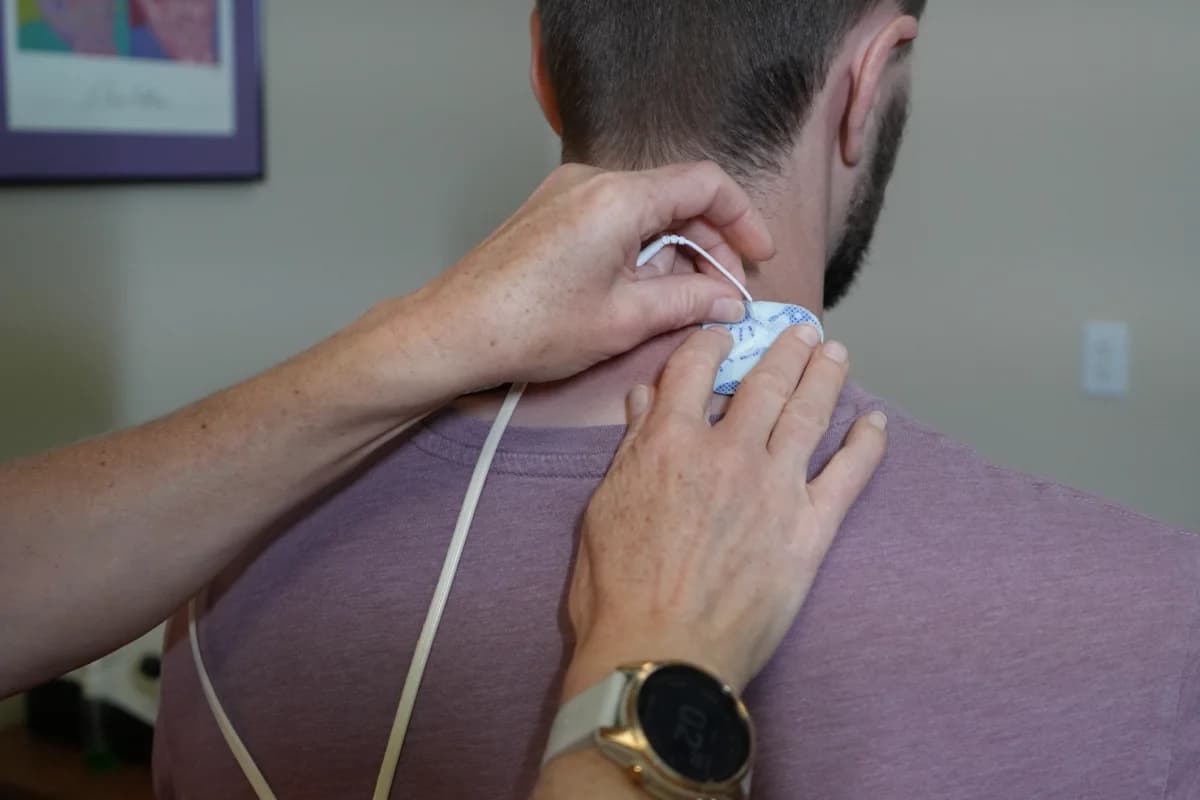
- Electrical muscle stimulation for pain relief
- Range-of-motion exercises and rehabilitation
- Posture correction and ergonomic guidance
Common Questions
How soon after a car accident should I be seen for whiplash?
Sooner is generally better. Soft-tissue injuries are easier to work with while they're fresh, and getting looked at early also means you aren't sitting on something for a month wondering about it. Call (512) 255-1777 and describe what happened and how you're feeling. Whoever answers will find you an appointment, and if we're not the right stop we'll tell you that on the phone.
I felt fine at the scene and now my neck is stiff. Is that normal?
Yes, and it's the most common version of this we hear. Adrenaline covers a lot in the first hours, and the swelling and muscle guarding after a collision often take a day or two to show up. Stiffness, a headache at the base of the skull, and sore shoulders appearing the next morning is a familiar pattern and worth having looked at rather than waiting out.
It was a low-speed collision. Can that really cause whiplash?
It can. The number on the report and the state of your bumper aren't reliable predictors of what happened to the people inside the car. Modern bumpers are built to resist damage, which can mean more of the force is transferred through the vehicle rather than absorbed by it. We look at you and how your neck is moving, not the vehicle.
What happens at a first visit for whiplash?
We go through what happened and what you've felt since, then look at how far your neck moves, where it's tender, and how your shoulders and upper back are moving with it. You'll get a plain explanation of what we found and what care would involve before anything is decided. Plan on about 45 minutes, and bring a photo ID and your insurance card if you have one.
Do I have to have my neck cracked?
No. A traditional neck adjustment is one option, not the only one, and after a collision we usually start gentler anyway. Low-force and instrument-assisted techniques, plus hands-on soft tissue work, are all on the table. Tell us at the start of the visit that you'd rather not, and we'll plan around it. Nothing happens without an explanation first, and you can stop us at any point.
How long does whiplash take to settle down?
Honestly, it varies a lot, and anyone giving you a fixed number without looking at you is guessing. It depends on the injury, your history, and how much you're able to rest and move sensibly in the first weeks. What we do is re-check as we go and tell you what we're seeing. If your neck isn't changing the way we'd expect, we'll say so and change course.
What should I wear, and how long will I be there?
Wear something you can move comfortably in, with a top that lets us reach your neck and shoulders. The first appointment runs about 45 minutes because that's where the conversation and the exam happen. Follow-up visits are much shorter, usually 15 to 20 minutes, and most people fit them around a work day.
Do I need a referral, and do you take insurance?
No referral is needed in Texas. You can book online or call (512) 255-1777. We accept most major health insurance plans, and we also take cash, check, and major credit cards. Coverage varies by plan, so call before your visit and we'll look at yours with you rather than leaving you to guess at the desk.
Where is your office, and do you speak Spanish?
We're at 3407 Wells Branch Pkwy, Suite 625, in Wells Branch, North Austin, with parking right at the door, and that's our only office. Patients come to us from Wells Branch, Pflugerville, and the Tech Ridge area, and we've been in this part of town since 1989. Rosamaria on our team speaks fluent Spanish and can help you from the front desk through your visit.
Ready to get started?
Book Appointment (opens in new window)Related Services

Auto Injury
Chiropractic evaluation and care after a car accident, including whiplash, neck pain, and back pain. North Austin office in Wells Branch.

Neck Pain
Adjustments and targeted therapy for posture-related, stress-induced, and whiplash neck pain.

Headaches & Migraines
Drug-free relief for tension headaches, migraines, and cervicogenic headaches through spinal care.
Ready to Start Feeling Better?
Schedule a consultation online or call us and we'll create a treatment plan tailored to your needs.