

Pain & Conditions
Degenerative Disc Disease

Degenerative disc disease involves the gradual breakdown of spinal discs over time. It cannot be reversed. Care focuses on comfort, mobility, and how well the surrounding joints and muscles are working. Proper spinal alignment reduces uneven pressure on discs, allowing them to function better and reducing the risk of herniation and nerve compression.
Degenerative disc disease has an alarming name for something fairly ordinary: the slow drying and thinning of the cushions that sit between the bones of your spine. It happens to essentially everyone with enough birthdays, and it turns up on scans of plenty of people who have no pain at all. That's worth saying first, because the phrase lands hard when it shows up in a report, and people often arrive here braced for news that their spine is falling apart. It's a description of change over time, not a verdict. How much wear shows up on a scan and how much a person actually hurts are often two different stories.
What tends to drive the aching usually isn't the disc change by itself. It's what has happened around it: parts of the back that have stiffened and stopped sharing the load evenly, and muscles that have tightened up to protect the area. That's why the pattern people describe is so recognizable. A low-grade ache most days. Flares that arrive without an obvious reason and then fade. Worse with sitting, bending, or lifting, and mornings that take a while to loosen. A lot of people find they feel better walking than sitting, which surprises them, and it's a useful thing to mention rather than leave out.
Here's the part to be straight about. Chiropractic care does not reverse disc wear, and nobody should tell you that it does. What care can be aimed at is your comfort, the movement available in the surrounding joints, and how well you get through an ordinary day. A first visit is a conversation and an exam before anything else: how your back moves and where it doesn't, which positions set your symptoms off and which settle them, and a look at how you sit, stand, lift, and sleep. If you've had scans done elsewhere, bring them or the report. If we think you'd be better served by another kind of doctor, you'll hear that instead of a treatment plan.
Where care is a good fit, it tends to be gentler and more deliberate than what people picture. The approach is adapted to you, and there are low-force options when a firmer technique isn't the right call. Alongside that, expect stretching and strengthening you can realistically keep up with, and honest conversation about the daily loads aggravating things, whether that's a chair, a lifting habit, or a mattress. Many people with long-standing disc changes come in now and then once things have settled rather than staying in continuous care, and that's a decision we make with you. The office is at 3407 Wells Branch Pkwy, Suite 625, in Wells Branch, North Austin, where the Chicoine family has cared for people since 1989. Book online or call (512) 255-1777.
Related Conditions
- Herniated discs
- Spinal stenosis
- Osteoarthritis of the spine
Symptoms You May Experience
- Chronic, low-grade pain in the lower back or neck
- Periods of severe pain that flare up and subside
- Pain that worsens with sitting, bending, or lifting
- Pain that feels better when walking or changing positions
- Numbness or tingling in extremities
- Muscle weakness in legs or arms
Treatment Approach
- Gentle spinal adjustments
- Physical therapy and rehabilitation
- Stretching and flexibility programs
- Preventive care to slow progression
- Ergonomic and lifestyle modifications
Common Questions
Is degenerative disc disease actually a disease?
Not in the way the name suggests. It's a descriptive term for age-related changes in the discs of the spine, and those changes are extremely common. Studies of people with no back pain at all routinely find the same changes on their scans. So a finding on a report isn't automatically the explanation for how you feel, and sorting that out takes an exam and a conversation rather than a scan alone.
Can chiropractic care reverse disc wear?
No. Nothing does, and any provider who tells you otherwise is overselling. What care can be directed at is different: your comfort, the movement available in the joints around the area, the muscle tightness that builds up, and how well you manage everyday activity. Those are worthwhile goals, and they're the honest ones.
Is the adjusting gentle, or is it the dramatic kind?
It's adapted to you, and for long-standing disc changes it's usually on the gentle end. There are low-force and instrument-assisted options if a firmer technique isn't right or simply isn't something you want. Everything is explained before it happens, and you can ask us to stop or change approach at any point in the visit. Nobody here is going to surprise you.
What happens at a first visit?
We go through your history, including anything you've already had looked at, then check how your back moves, which positions bother you and which help, and how you sit, lift, and sleep. You get a plain explanation of what was found and what care would involve before anything is decided. Plan on about 45 minutes, and wear something you can move in comfortably.
Should I stop exercising?
Usually not, though what you do and how you do it may need to change. Staying active generally serves a back better than avoiding movement. Specific loads, like heavy repeated bending, may need adjusting. We'll give you guidance based on what we actually see rather than a blanket rule, and we'll change it as things change for you.
Will I be coming in forever?
That's your call, and we'll be straight with you about it. Care is usually more frequent while things are flared up and eases off as they settle. Some people with long-standing disc changes choose to come in periodically to stay ahead of flares. Others come back only when they need to. Neither is required, and we'd rather you understand the choice than sign up by default.
How long is an appointment?
The first one runs about 45 minutes, because that's where the conversation and the exam happen. Follow-up visits are much shorter, usually 15 to 20 minutes, and most people fit them around a work day. We're open mornings and afternoons Monday through Thursday and mornings on Friday, so call and we'll find the slot that works.
Do I need a referral, and do you take insurance?
No referral is needed in Texas. You can book online or call (512) 255-1777. We accept most major health insurance plans and also take cash, check, and major credit cards. Coverage varies by plan, so call before your visit and we'll look at yours with you rather than leaving you to find out at the desk.
Where are you located?
3407 Wells Branch Pkwy, Suite 625, in Wells Branch, North Austin, with parking right at the door. We see people from across North Austin, Wells Branch, and Pflugerville, and the Chicoine family has practiced in this part of town since 1989. There's one office, this one. Rosamaria on our team speaks fluent Spanish.
Ready to get started?
Book Appointment (opens in new window)Related Services
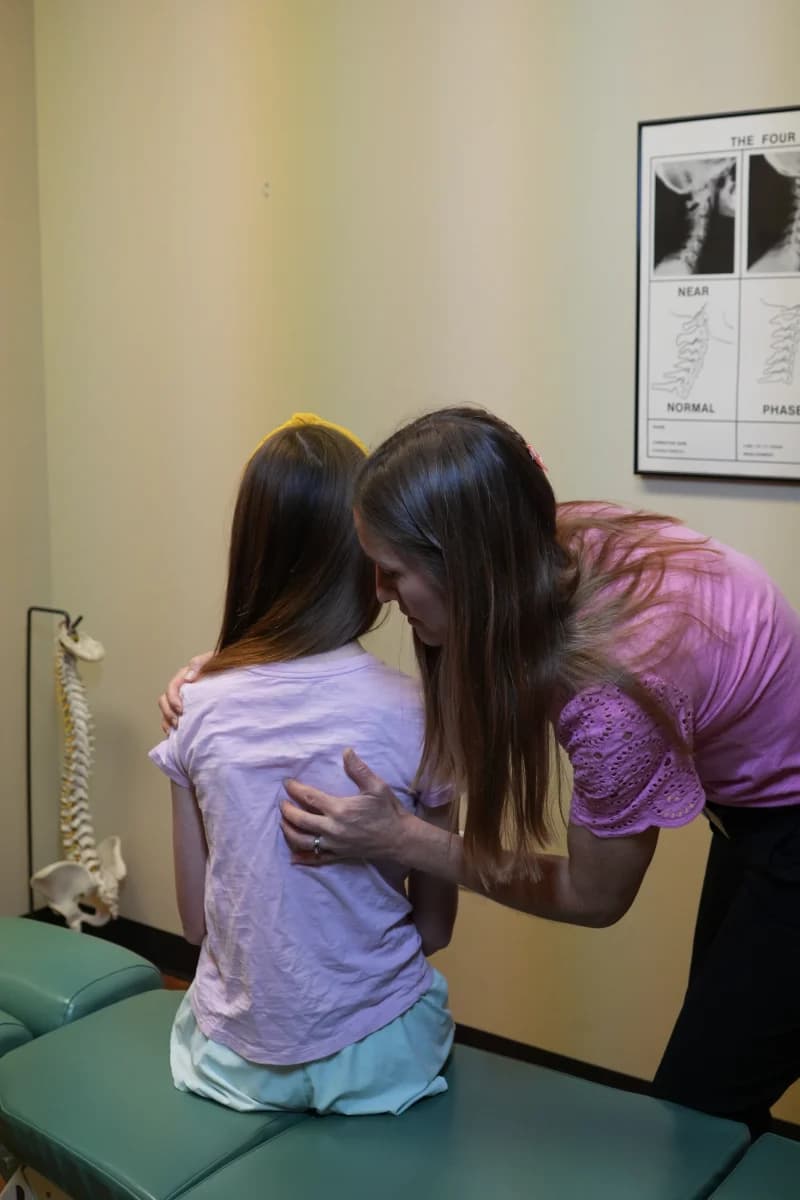
Back Pain
Spinal adjustments, electrical stimulation, and therapeutic exercise for lasting back pain relief.

Neck Pain
Adjustments and targeted therapy for posture-related, stress-induced, and whiplash neck pain.
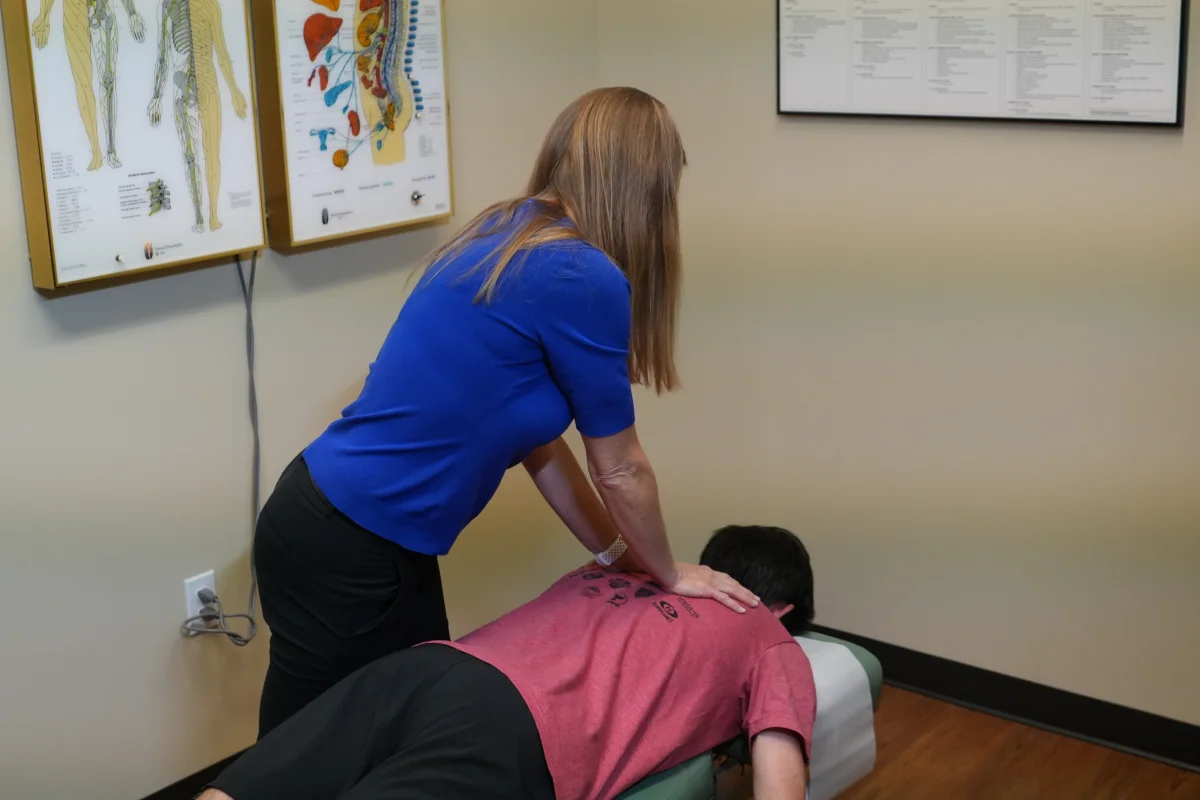
Sciatica
Spinal alignment, soft tissue therapy, and custom orthotics to relieve sciatic nerve pain.
Ready to Start Feeling Better?
Schedule a consultation online or call us and we'll create a treatment plan tailored to your needs.