

Pain & Conditions
Tech Neck
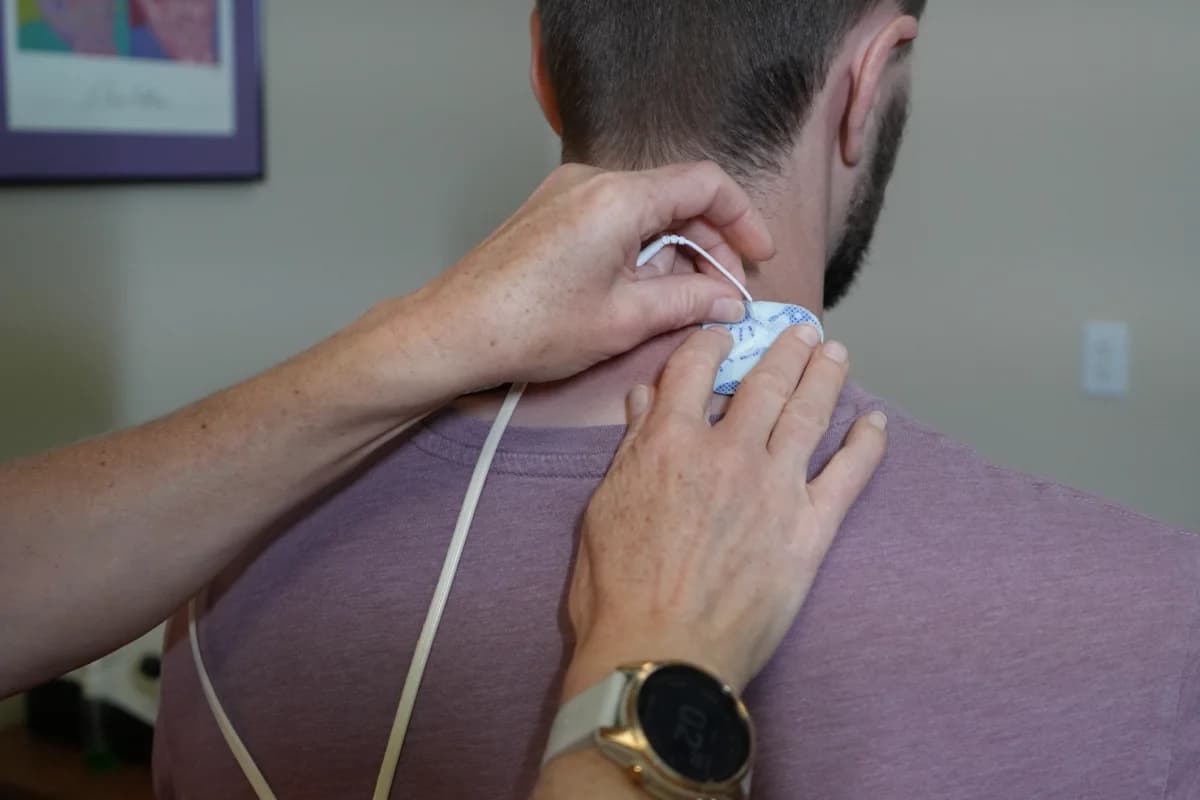
Tech neck — sometimes called text neck — is the strain that builds up from hours spent looking down at a laptop, monitor, or phone. Every inch your head drifts forward multiplies the load your neck has to hold, and in a screen-heavy area like North Austin we see it constantly: in coders, students, remote workers, and anyone whose day happens at a desk. Over time that forward-head posture stiffens the joints, overworks the muscles between the shoulder blades, and irritates the nerves that trigger tension headaches. Chiropractic care restores proper motion to the neck and upper back, eases the muscle tension, and — just as importantly — gives you the posture and ergonomic habits to keep it from coming back.
Almost nobody books an appointment and says they have tech neck. What they say is that their neck is stiff by Wednesday, their shoulders sit somewhere up around their ears, and a dull headache turns up around three in the afternoon. Then, usually near the end of the conversation, they mention they've been at a laptop since seven that morning and that this has been going on for about a year. That's the pattern, and some version of it walks into our Wells Branch office most weeks. It rarely arrives as a dramatic injury. It arrives as a slow accumulation that people talk themselves out of getting looked at, because nothing about it feels serious enough to bother a doctor with.
North Austin is a screen-heavy part of town, and that shows up in who sits in our exam rooms. Remote workers whose desk is really the kitchen table. Engineers with two monitors and a phone parked within reach. Students, nurses finishing charts at the end of a shift, and plenty of people who retired out of a desk job and now read on a tablet instead. The common thread isn't age and it isn't weakness. It's hours spent with the head carried out in front of the shoulders rather than stacked over them, so the muscles and joints of the neck and upper back end up doing a holding job they were never meant to do for eight hours at a stretch. What that produces, over months, is joints that stop moving through their full range, muscles between the shoulder blades that never quite switch off, and tightness at the base of the skull that can send pain forward into the head.
A first visit is mostly questions and hands. Dr. Shelly Hogan and Dr. Nicole Edwards will ask what your day actually looks like, where the pain sits, when it started, and what you've stopped doing because of it. Then they check how your neck and upper back move, which parts are stuck, where you're tender, and how your shoulder blades sit. It's worth being specific with them about the small things, like which side you hold your phone on or which shoulder carries the laptop bag, because those details usually turn out to be part of the picture. You'll get a plain explanation of what we found and what a course of care would involve before you agree to anything.
Care itself usually combines two things. In the office, that means adjustments to restore movement to the neck and upper back, hands-on work for the muscles that have been overworking, and progress checks so you aren't simply repeating the same visit indefinitely. Outside the office, it means changing the thing that caused it, because a neck that spends forty hours a week in the same forward position will find its way back there. So expect specific, unglamorous guidance about monitor height, chair, phone habits, and a couple of exercises that take five minutes rather than an hour. The Chicoine family has been caring for North Austin families since 1989, and the office is at 3407 Wells Branch Pkwy, Suite 625, with parking right at the door and a few minutes from Pflugerville. You can book online or call (512) 255-1777, and no referral is needed in Texas.
What Causes Tech Neck
- Long hours at a laptop, monitor, or phone
- A workstation set too low or off to one side
- Forward-head posture that loads the neck
- Working from a couch, bed, or kitchen table
- Few movement breaks during the workday
- Carrying stress in the neck and shoulders
Symptoms You May Recognize
- Aching or stiffness at the base of the neck
- Tension headaches that build through the afternoon
- Tight, knotted muscles between the shoulder blades
- Reduced range of motion when turning your head
- Rounded shoulders and a forward-jutting head posture
- Numbness or tingling into the arms or hands
How We Treat Tech Neck
- Neck and upper-back adjustments to restore motion
- Targeted soft-tissue work for tight muscles
- Posture correction and desk-setup guidance
- Simple stretches and strengthening you can do at work
Common Questions
What is tech neck, exactly?
It isn't a formal diagnosis. It's the everyday name for the strain that builds when your head spends most of the day out in front of your shoulders instead of stacked over them. The load lands on the joints of the neck and upper back and on the muscles holding the position. What people feel is stiffness, tension across the shoulders, and often a headache that starts at the base of the skull.
Will it come back after I stop coming in?
That depends mostly on the desk, not on us. In-office work can loosen stiff joints and ease muscle tension, but if you go back to the same monitor height and the same eight hours without moving, the same load comes back with it. That's why we spend part of every visit on workstation setup and a short exercise routine. The habit change is the part that carries the result forward.
How many visits will I need?
There's no honest number to quote before an exam. It depends on how long it's been going on, what we find, and whether the underlying setup changes. What we can tell you is that we re-check as we go and talk about progress openly. If you aren't improving, that's a reason to change the plan, not a reason to keep booking visits.
How long is an appointment, and how soon can I be seen?
The first visit runs about 45 minutes to an hour because that's where the conversation and the exam happen. Follow-ups are usually 15 to 20 minutes, which most people fit around a work day. We're open mornings and afternoons Monday through Thursday and mornings on Friday. Call (512) 255-1777 and we'll find you the earliest slot that works.
What happens at a first visit?
We talk first: your work setup, your symptoms, when they started, and what's changed. Then comes the exam, which looks at how the neck and upper back move, where you're tender or stuck, and how you carry your head and shoulders. You get a plain-language explanation of what was found and what care would involve before anything is decided. Wear clothes you can move in.
Does a neck adjustment hurt?
Most people describe it as quick pressure rather than pain, and some feel looser right away while others feel a little sore the next day, the way you might after new exercise. Everything is explained before it happens, and the technique is adapted to you. If you're uncomfortable with a particular approach, say so and we'll use a different one. Low-force options are always available.
Do you help with the desk setup itself?
Yes, and it's a real part of the visit rather than a handout. We'll go through monitor and laptop height, chair and keyboard position, how you hold your phone, and how often you should be getting up. Bring a photo of your actual workspace if you can. It's much easier to fix a setup we can see than one described from memory.
Where is your office, and do you see people from Pflugerville?
We're at 3407 Wells Branch Pkwy, Suite 625, in Wells Branch, North Austin, with parking right at the door, and yes. We see people from across North Austin, Wells Branch, and Pflugerville. There's one office, this one. Rosamaria on our team speaks fluent Spanish and can help you from the front desk through your visit.
Do I need a referral, and do you take insurance?
No referral is needed. Texas has direct access, so you can book with a chiropractor yourself. We submit claims for most major health insurance plans and also take cash, check, and major credit cards. Coverage varies by plan, so the fastest way to know where you stand is to call (512) 255-1777 before your visit and we'll check it with you.
Ready to get started?
Book Appointment (opens in new window)Related Services
Neck Pain
Adjustments and targeted therapy for posture-related, stress-induced, and whiplash neck pain.

Headaches & Migraines
Drug-free relief for tension headaches, migraines, and cervicogenic headaches through spinal care.
Shoulder Pain
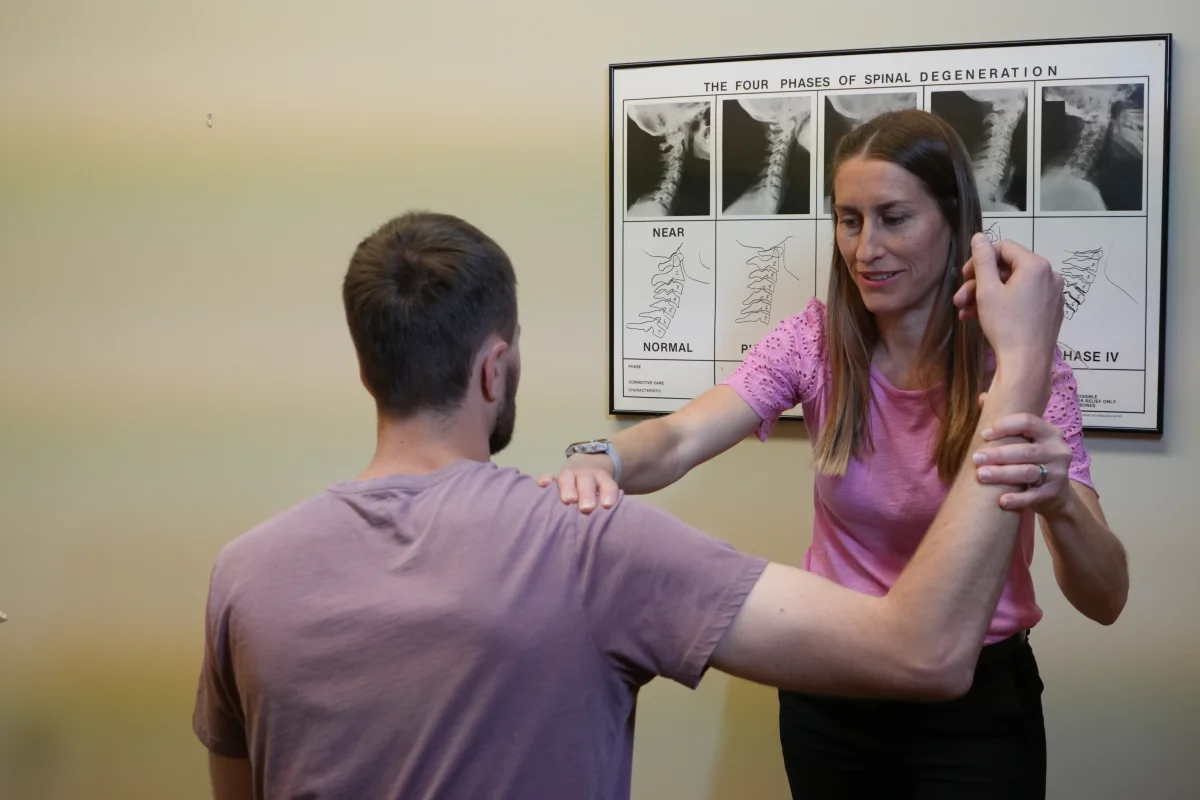
Care for stiff, aching, and hard-to-lift shoulders, including pain that starts in the neck or upper back.
Ready to Start Feeling Better?
Schedule a consultation online or call us and we'll create a treatment plan tailored to your needs.